


GoLinks is a Bitly alternative for companies that need memorable internal links and a faster way for employees to reach workplace resources. Bitly is primarily built for public links, marketing campaigns, QR codes, and external analytics. GoLinks is built for internal navigation.
The two products overlap, but they are not interchangeable in every situation. This guide compares GoLinks and Bitly by use case, link management, analytics, security, integrations, and pricing.
GoLinks vs. Bitly: at a glance
| Feature | GoLinks | Bitly |
|---|---|---|
| Primary use case | Internal company navigation | Public links and marketing campaigns |
| Best for | Employees, IT, operations, HR, and distributed teams | Marketing, social, events, and external campaigns |
| Link format | Memorable go/ links | Short public URLs (not keword based, hard to share verbally or type into a browser |
| Internal resource access | Core use case | Not the primary use case |
| Destination updates | Update the destination behind an existing go link | Available features vary by plan |
| Analytics | Internal link, department and usage analytics | Click, campaign, and channel analytics |
| QR codes | Not the primary focus, but available | Core use case |
| Public branded links | Not the primary focus | Available on applicable plans |
| Workplace integrations | Links to internal tools and resources | Marketing and campaign integrations |
| Pricing | Free option available; paid plans vary by tier | Free and paid plans; verify current limits and pricing |
| Best fit | Internal resources and employee workflows | External distribution and marketing attribution |
If your team needs a simple way to share public campaign links, Bitly may be the better fit. If your team needs a shared layer for internal resources, GoLinks is the more relevant option.
What is the difference between GoLinks and Bitly?
The main difference is the audience each product is designed to serve.
Bitly helps teams shorten and measure links shared with customers, prospects, event attendees, and social audiences. Its platform includes URL shortening, QR codes, analytics, and Pages. (Bitly pricing)
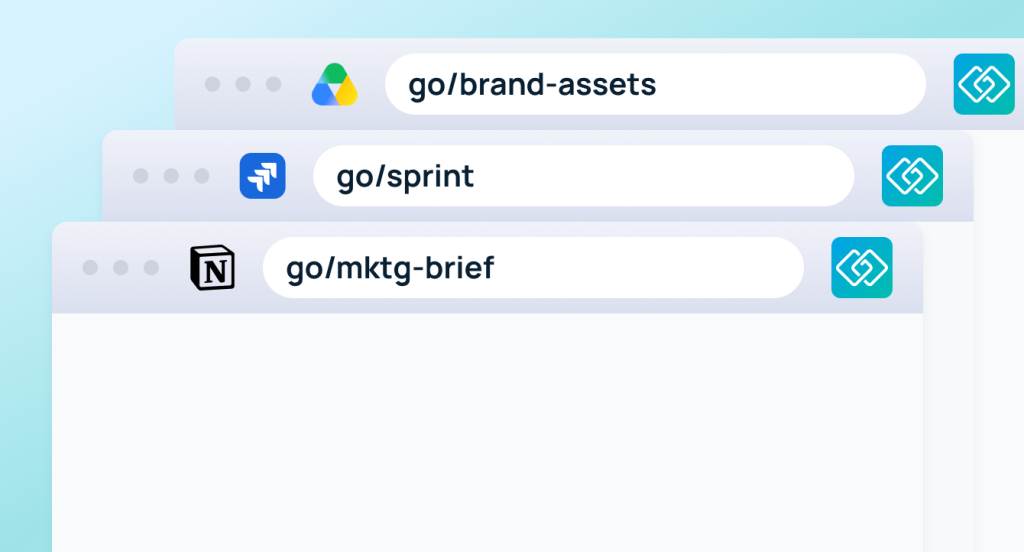
GoLinks helps employees access company resources through short, recognizable links. A team might create links such as:
go/handbookgo/benefitsgo/expensesgo/roadmapgo/onboardinggo/helpdesk
Both products shorten URLs. GoLinks adds an internal naming and navigation layer around those links.
Why are companies looking for Bitly alternatives?
Bitly is often a good starting point for public links. Internal use cases can become more complicated as a company adds more tools, documents, dashboards, and employee workflows.
Teams may look for a Bitly alternative when:
- Employees struggle to remember or share long URLs.
- Important resources are spread across too many systems.
- Teams need a consistent naming system for internal links.
- IT needs to manage link ownership and access.
- Link destinations change during software migrations.
- Employees spend too much time searching for frequently used resources.
- Leaders want to understand which internal resources are being used.
A short URL solves only the length problem. Internal link management also involves naming, access, ownership, governance, and discoverability.
Choose GoLinks if you need internal company links
GoLinks is designed for teams that want a consistent way to access workplace resources.
It may be a good fit if your organization needs:
- Memorable links that employees can type or say aloud.
- A central directory of internal resources.
- Links to documents, dashboards, applications, and project spaces.
- Stable links that can point to a new destination later.
- SSO and access controls.
- Usage and workspace analytics.
- Browser and workplace-tool integrations.
- Variable links for dynamic destinations.
For example, an HR team could use go/benefits for the employee benefits portal. If the company later changes HR systems, the destination can be updated without changing the link employees already know.
Learn more about how GoLinks works and how to use go links.
Choose Bitly if you need public marketing links
Bitly may be the better choice when your links are intended for an external audience.
Bitly is a stronger fit when your team needs:
- Links for social media, email, advertising, or events.
- Click and campaign reporting.
- QR code generation.
- Branded public domains.
- Marketing attribution.
- External landing pages or link-in-bio experiences.
- Integrations with marketing and customer-facing tools.
The deciding factor is usually the audience. Bitly is built around external distribution. GoLinks is built around internal access.
How do GoLinks and Bitly handle links?
GoLinks uses memorable names
GoLinks links are created around names that people can recognize and remember. Common examples include:
go/itgo/salesgo/supportgo/jirago/runbookgo/quarterly
This makes links easier to share in meetings, documentation, chat, and email.
Bitly creates short public URLs
Bitly is useful when a long public URL needs to be shortened for a campaign, social post, QR code, or email. Branded links and custom domains are available on applicable plans.
GoLinks keeps the link stable when the destination changes
A GoLink can continue pointing to the right place even when the underlying resource moves. This helps during:
- Software migrations.
- Website updates.
- Documentation reorganizations.
- Changes to HR or finance systems.
- Project transitions.
- Dashboard updates.
The link employees know can stay the same while the destination changes.
How do GoLinks and Bitly compare for security?
Internal resources and public campaign links have different security requirements.
GoLinks supports internal use cases such as employee portals, company documentation, project dashboards, and internal applications. Depending on the organization’s configuration, users may need to authenticate before accessing a protected destination.
Bitly links are generally designed for public sharing. Teams should be cautious about using a public link shortener for sensitive internal resources.
When evaluating either product, review:
- Whether links can be accessed publicly.
- Whether authentication is required.
- How access is revoked.
- How link ownership is managed.
- Whether activity can be audited.
- Which administrative and compliance controls are available.
A shortened URL is not, by itself, a security control. The destination and authentication model matter more than the URL length.
How do GoLinks and Bitly compare for analytics?
Bitly analytics are focused on external engagement. Depending on the plan, teams can measure clicks and campaign activity across links and channels.
GoLinks analytics are focused on internal adoption and resource usage. Teams can use them to understand:
- Which links employees use most often.
- Which resources are important across departments.
- How usage changes over time.
- Which applications employees access frequently.
- Where employees may need a new internal link.
The products answer different questions:
- Bitly: Which campaign or channel generated engagement?
- GoLinks: Which internal resources do employees use, and how do they find them?
Review the current GoLinks analytics documentation for plan-specific capabilities.
How do GoLinks and Bitly compare for integrations?
Bitly integrations are primarily connected to marketing and customer communication workflows.
GoLinks can point employees to resources across tools such as (13 plus total integrations):
- Google Drive
- Google Docs
- Google Slides
- Jira
- GitHub
- Asana
- Figma
- Slack
- Microsoft Teams
- Google Workspace
- Internal dashboards and applications
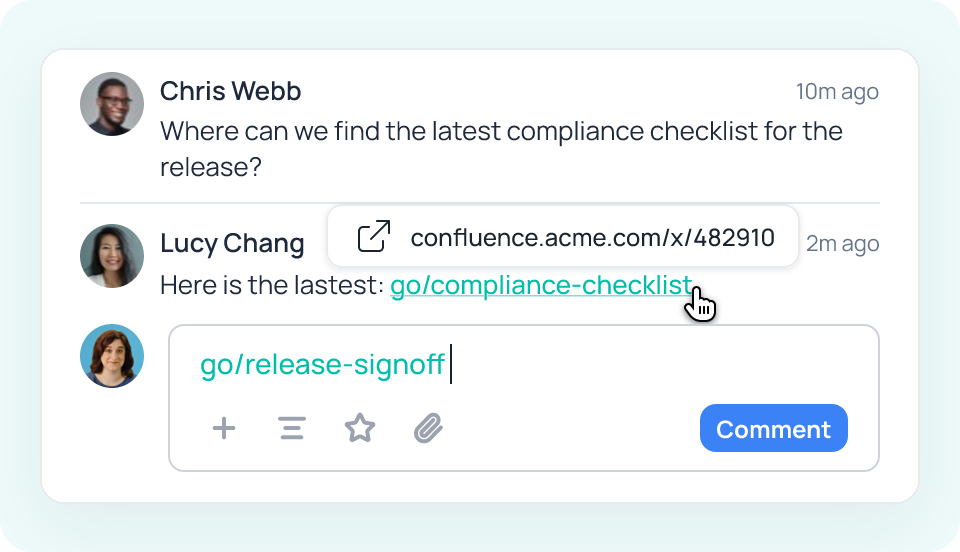
The simplest distinction is:
- Use Bitly to connect marketing channels to external audiences.
- Use GoLinks to connect employees to internal resources.
How much does GoLinks cost compared with Bitly?
GoLinks offers a free option and several self-serve options as well as an Enterprise plan which has additional features and functionality including SSO/SKIM, user-provisioning and advanced analytics.
Bitly offers free and paid plans. Its platform includes URL shortening, QR codes, analytics, and Pages. Pricing and limits depend on the plan, so check the official Bitly pricing page for current details.
When comparing costs, consider more than the subscription price:
- Number of users.
- Number of links.
- Custom domains.
- Analytics requirements.
- QR code requirements.
- Administrative controls.
- Implementation and migration work.
- Ongoing maintenance.
- Employee time spent searching for resources.
When might Bitly be the better choice?
Bitly may be the right choice when your primary goal is external distribution and campaign measurement.
Teams may prefer Bitly when:
- Marketing owns link management.
- Links are shared through public channels.
- Campaign attribution is important.
- QR codes are part of the workflow.
- Branded public domains are required.
- Reporting by campaign or channel is needed.
- The existing marketing stack already depends on Bitly.
A company does not need to replace Bitly simply because it is evaluating internal link tools. Some teams use Bitly for public campaigns and GoLinks for internal resources.
Is GoLinks a replacement for Bitly?
GoLinks can replace Bitly for some internal use cases, but it is not intended to replace every Bitly workflow.
GoLinks may be a better option for:
- Internal documents.
- Employee portals.
- Project dashboards.
- Engineering tools.
- Team resources.
- Internal knowledge bases.
- Workplace applications.
Bitly may remain the better option for:
- Public marketing campaigns.
- Social media links.
- Customer-facing URLs.
- QR code campaigns.
- Campaign attribution.
- External landing pages.
The best choice depends on whether the link is primarily for employees or an external audience.
What should you look for in a Bitly alternative?
Evaluate each alternative against these criteria:
- Audience: Who will use the links?
- Naming: Can people create and remember meaningful links?
- Destination management: Can a link be updated without changing its name?
- Access controls: Can administrators manage who creates and uses links?
- Analytics: Does reporting measure the activity your team cares about?
- Integrations: Does the platform connect to the tools your team already uses?
- Governance: Can teams manage ownership, permissions, and naming standards?
- Scalability: Can the platform support more users and departments over time?
- Implementation: How much work is required to deploy and maintain it?
- Total cost: Does the price account for administration and employee time?
The key question is not just which platform shortens URLs. Which platform helps your team share and find resources more effectively?
Why companies choose GoLinks for internal link management
GoLinks combines short links with an internal navigation system for workplace resources.
Teams use GoLinks to:
- Make internal resources easier to find.
- Reduce dependence on long URLs and unmanaged bookmarks.
- Share resources verbally during meetings.
- Create consistent link names across departments.
- Update destinations when systems change.
- Identify heavily used resources.
- Give employees a faster way to reach everyday tools.
For public marketing links, Bitly may be the better fit. For memorable internal links and employee workflows, GoLinks is a more focused alternative.
Try GoLinks for free or schedule a GoLinks demo.
Access and share resources instantly with GoLinks
Try for free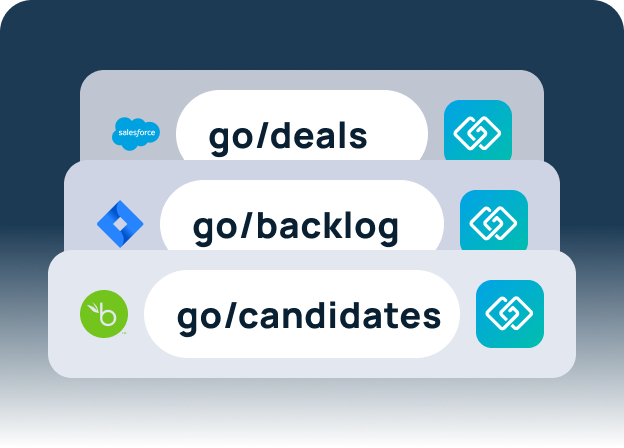
Frequently Asked Questions
What is the best Bitly alternative for internal company links?
GoLinks is designed for internal company links, employee navigation, and workplace resource management. Bitly is generally better suited to public links, QR codes, and marketing analytics.
Is GoLinks the same as Bitly?
No. Both platforms shorten URLs, but GoLinks focuses on internal workplace navigation. Bitly focuses primarily on public links, branded URLs, QR codes, and campaign analytics.
Is Bitly good for internal company links?
Bitly can shorten internal URLs, but internal workplace navigation is not its primary use case. Companies should compare authentication, access controls, link ownership, discoverability, analytics, and integrations before using it for internal resources. Also the links are a random combination of numbers and letters and can’t be easily shared verbally or typed in your browser to access.
What is an internal URL shortener?
An internal URL shortener helps employees access company resources through short, memorable links. Unlike a public link shortener, it may also include access controls, internal analytics, administration, and integrations with workplace tools.
Does GoLinks replace Bitly for marketing campaigns?
Usually not. Bitly may be a better fit for public campaigns, QR codes, and marketing attribution. GoLinks is better suited to internal company resources and employee workflows.
How much does GoLinks cost?
GoLinks offers a free option, and the Basic plan is listed at $2 per user per month. Pricing and included features can change, so review the current GoLinks plans before purchasing.